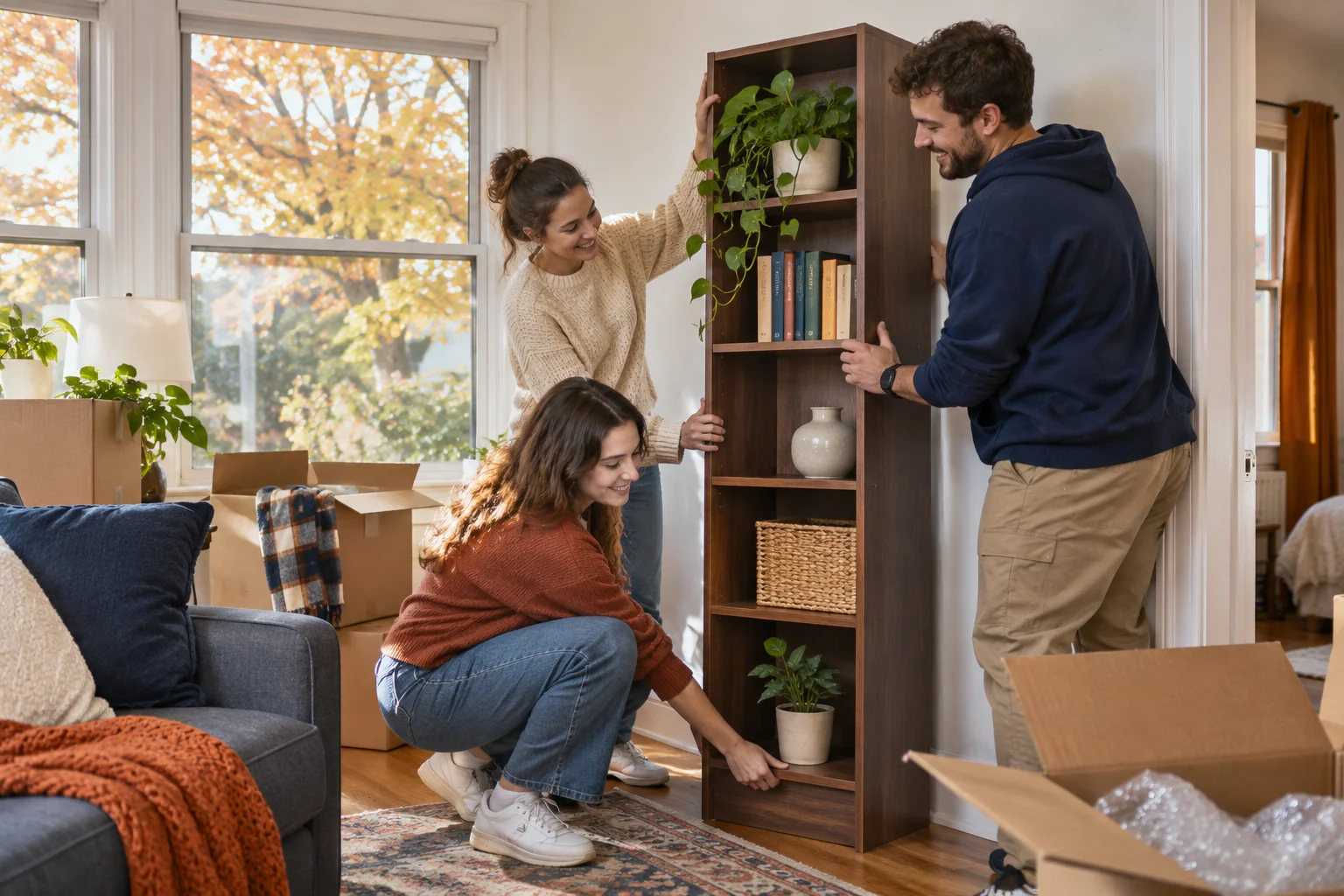
Start with the belongings that determine the job
List furniture, equipment, and collections that need more explanation than a carton count. Include large tables, cabinets, exercise equipment, musical instruments, artwork, and anything awkward to grip. Photograph the item and describe its present location and intended room. Ask the provider what further information is needed to assess handling rather than offering an uncertain weight or promising easy access.
Then inventory the ordinary rooms and storage areas. Open closets and cupboards instead of estimating their contents from the doorway. Identify belongings at another address. Keep the inventory dated and update it as items leave through sale, donation, or return. Send the same version to companies preparing estimates so differences in their proposals do not originate with different descriptions of the household.
Decide what deserves space in the new home
Measure the destination before allocating furniture. Include space needed to sit, work, open storage, and move between rooms. A floor plan can reveal a duplicate cabinet or table that the household no longer needs. Make decisions while there is time to arrange collection rather than leaving all unwanted pieces in a pile beside the moving load.
For sentimental objects, discuss ownership and destination before packing them. Photograph an arrangement when that helps preserve its meaning without keeping every component. Give relatives a clear collection date for items they want. If storage is part of the plan, define the contents and a review point. An unspecified temporary arrangement often becomes harder to manage once the move has consumed everyone's attention.
Inspect the route for the largest pieces
Measure the narrowest openings and the turns between them. Note stair landings, ceiling height, railings, and fixed obstacles. Photograph the route from several useful angles. The width of a doorway alone will not show whether an object can turn into it. Give the measurements to the person who will handle the item and ask about any uncertainty.
Discuss dismantling and reassembly separately from carrying. Some pieces can be prepared with ordinary tools; others need specialist help or manufacturer guidance. Keep labeled hardware and instructions accessible. If the property is rented, obtain permission before removing doors or making changes. Resolve an unsuitable item before transport instead of hoping that enough effort at the destination will create a route that does not exist.
Use Neenah's moving account process
The City of Neenah's Utility Billing page provides a moving out and starting service option involving a scheduled meter reading. Review the current instructions and ask what applies to your property and account responsibility. Keep the requested date and confirmation together. If you are renting, establish which charges belong to you before submitting account information.
The city identifies its Finance Department as the contact for water account setup and billing changes. Use the official contact directory when a question concerns billing rather than a physical water system issue. Keep electricity, gas where applicable, internet, and other services on separate lines in your task list. Confirm each provider by address and check that an unfinished account request remains visible until resolved.
Give estimates a consistent basis
Describe the load, the dates, the carrying route, and the services you need. State whether packing is included or will be complete before arrival. Add extra stops, storage, and unusual pieces explicitly. Ask the company to document the scope and assumptions so that you can compare meaningful details rather than a single figure that leaves the work unclear.
Read the provisions about stairs, longer carries, waiting, travel, inventory changes, and cancellation. Clarify when payments are due and how additional work is authorized. Ask which damage responsibility or protection terms apply to the particular move. Save the terms and relevant correspondence together. If a major detail changes, request an updated arrangement and keep the current version available to the household contact directing the day.
Pack collections as identifiable groups
Photograph collections before separating them, particularly when components belong together. Give each carton a number and record its contents in a separate list. Protect pieces individually and avoid direct contact between hard or fragile surfaces. A fragile label does not compensate for loose movement inside a carton. Test the closed box gently before adding it to a stack.
Keep collection labels discreet when details would reveal valuable or sensitive contents. Use the destination room and inventory number externally. Carry irreplaceable small objects and essential records personally when practical, under an agreed secure arrangement. Tell the provider about items requiring disclosure or different handling. Do that before sealing the box so the company can explain what it accepts and how preparation affects the agreement.
Keep paper records useful during the move
Separate documents needed for property access, identification, work, school, and care routines from files that can remain packed. Store current confirmations in an accessible folder and retain a backup that does not depend on one phone. Keep sensitive information out of casual messages or external carton labels. Each household member should know how to reach the documents they may need.
For ordinary files, pack in manageable quantities and keep their ordering system intact. Number containers rather than writing lengthy descriptions across every surface. Avoid placing paper cartons on a damp floor while waiting for transport. If a file collection is being reduced, complete secure disposal through an appropriate arrangement before the moving deadline instead of leaving a mixed pile of private papers for someone else to sort.
Agree on the outside loading position
Show the provider the street approach, driveway, overhead clearance, and proposed entrance. Identify tight turns and a place to leave after loading. Ask the operator to judge the vehicle maneuver rather than assuming a truck can stand wherever your car fits. Disclose a shared drive or surface concern and include photographs when possible.
Get the necessary authorization for any planned use of shared or public space. Management or the appropriate municipal contact should answer the specific question. Keep pedestrian access, neighboring entrances, and emergency routes open. Decide where helpers will park before they arrive. If a longer carry or alternate entrance is required, let the provider account for it in the planned work and timing rather than discovering it after unloading begins.
Design a first evening kit for your household
Think through the hours between leaving the old property and going to bed at the new one. Pack food, drinking water, bedding, towels, hygiene supplies, necessary medication, chargers, and clothes accordingly. Add what is needed for work or school the following morning. Place these supplies in an accessible vehicle or clearly separated part of the home.
Give children and pets their own familiar belongings and an adult responsible for their location during carrying. Secure the destination space before using it, and explain any door that must remain closed. Keep identification and relevant records available. If household members travel at different times, do not let all essentials follow the person arriving last without a deliberate alternative for those already at the property.
Keep the destination organized while items arrive
Use temporary signs with the same room names written on cartons. Position major furniture first and leave enough clearance to use it. Put carton stacks where they do not block doors, vents, controls, or safe walking routes. Keep the arrival supplies separate from general storage boxes. One informed household contact can answer questions while others handle supervision or inventory checks.
Compare delivered items against the list as practical. Look at significant furniture and included reassembly before the provider leaves. If something is missing or damaged, use the agreed reporting process and preserve relevant photographs or packaging. Write down any task still pending and who will address it. Do not rely on several helpers remembering the same informal promise after a long day.
Finish the old address without loose ends
Schedule the departure clean and inspection as part of the move. Check built in storage, outside areas, and places where small objects are easily overlooked. Follow the lease or sale agreement for returning keys and access devices. Photograph the final condition and keep the handover record with your service end requests. Record any account action still awaiting confirmation.
Handle donations and disposal before the final deadline. Verify what a recipient accepts and make an alternative plan for a failed collection. Check current arrangements for bulky waste, electronics, paint, batteries, and chemicals. Do not leave rejected items behind because the truck has already gone. A departure is complete when belongings, responsibilities, and access have all been transferred as agreed.
Review the home after an ordinary working day
Unpack the items used every day before occasional collections. Set up sleeping, hygiene, food preparation, and necessary work equipment first. Locate system controls and ask the appropriate property contact about anything unfamiliar. Report concerns with a clear description and keep a short list of outstanding tasks. A small working area in each essential room is enough to begin.
Review utility requests, delivery addresses, and recurring services during the first week. Use Neenah's official contacts for current municipal questions. Once routines are visible, revisit the furniture arrangement and collection storage. Nearby Menasha, Appleton, or Oshkosh guides can help when another address is involved, but do not transfer one property's account instructions or building arrangements automatically to another.
Questions for protecting identifiable collections and furniture
Should a collection be packed as one large group? Consider the weight, fragility, and way it will be unpacked. Several manageable cartons with clear inventory numbers may be easier to check than one oversized container. Photograph the arrangement before separating pieces and record which components belong together. Keep especially sensitive details in the private contents list. Ask the provider about any declaration or preparation requirements for valuable objects. The collection should remain identifiable throughout the move without depending on a helper recognizing every piece by sight.
What if measurements suggest a furniture route is very tight? Send accurate dimensions and useful photographs to the person responsible for handling it. Include turns and fixed obstacles, not just the opening that appears narrowest in isolation. Ask whether dismantling is appropriate and who would perform it. Do not remove parts by guesswork or assume a rented property can be altered without permission. If the route remains doubtful, decide another destination before loading. A clear decision is preferable to discovering at delivery that the piece blocks the only practical entrance.
How can you preserve a paper filing system during transport? Separate active records from the material that can stay packed. Keep existing categories together and number containers in a way that links to a private contents list. Use weights that remain manageable and protect the cartons from ordinary moisture exposure while waiting. Complete secure disposal of unwanted records through a suitable arrangement before departure. After arrival, establish a permanent location for the active file rather than letting it circulate among temporary bags and piles of unpacked papers.
What should remain accessible while important pieces are checked? Keep the inventory, preloading photographs, delivery paperwork, and provider contact details together. Record a concern through the process in the agreement and preserve relevant packaging until its purpose is clear. Check included assembly and ask about missing components while the relevant people are available. Avoid allowing a collection review to block the carrying route. Set a safe place for careful unpacking after the heavy work finishes, then check one identified carton at a time.
Check photographs before deleting them after unpacking. An image may still help identify furniture parts, collection groupings, or the condition relevant to an unresolved question. Keep useful records in a labeled folder with the inventory. Remove duplicates only after the most important items have been checked and the household knows where its continuing records will be stored for later reference.
Official starting points
Neenah Utility Billing and moving requests ↗Neenah water utility contact guide ↗Use current official instructions for your address and moving date. This guide provides planning information and does not confirm service availability.